
Putin Missing From the Kremlin as Internet Blackouts Spread and Control Tightens Across Russia

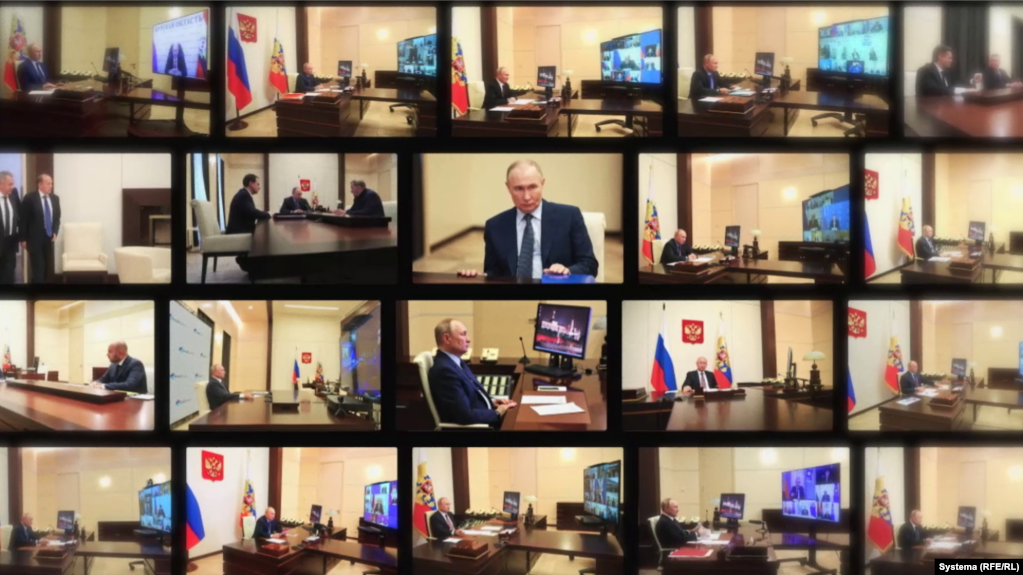
While we are all focused on the Middle East and Iran, something strange is happening inside Russia. There are reports that Vladimir Putin has largely stopped showing up at the Kremlin, and not just for a day or two, but for over a week, which, by his standards, is unusual.
According to Agentsvo, an independent Russian investigative outlet, public events at the Kremlin have effectively vanished from his schedule, with the last confirmed appearance on March 9 during a meeting on global oil and gas markets. Everything since then has been reduced to meetings that may or may not have happened in person, including sessions with governors, the education minister, and the head of Sberbank, along with a Security Council meeting conducted by video.
In other words, these appearances could be staged, pre-recorded, or held from one of multiple residences where Putin maintains identical office setups, making it nearly impossible to tell where he actually is.
This gap goes beyond his typical pattern, where absences from the Kremlin rarely last more than a few days, and even the longer pauses earlier this year were shorter and still included confirmed in-person appearances, making this stand out more clearly. During past crises, including the Wagner Group mutiny led by Yevgeny Prigozhin, Putin would fall out of public view as events unfolded before returning with a televised address once control had been restored. He tends to step back when things are uncertain and reappear once the outcome is clear, an approach shaped in part by his time in Dresden, when things rapidly unraveled around him. This extended absence from the Kremlin feels less routine and more deliberate.
The paranoia in Russia is real, and not entirely without reason. Pro-Kremlin voices are now openly suggesting that Western intelligence tracked and eliminated Iranian leaders using the surveillance systems meant to control the population, including urban cameras and digital infrastructure that quietly map movements over time, raising an obvious question about who might be next. Whether every detail is true almost doesn’t matter. What matters is how it’s being understood inside Russia, one of the most heavily surveilled states in the world, where monitoring is woven into daily life. It is a reminder that the same systems designed to control society can also expose those at the very top, turning tools of control into potential vulnerabilities.
And all of this is happening against the backdrop of something far more visible inside Russia, where mobile internet blackouts have begun sweeping across Moscow, disrupting daily life and leaving residents increasingly cut off. Large parts of the capital have experienced significant outages in recent weeks, with authorities framing the disruptions as necessary for “security,” particularly to counter Ukrainian drone threats, even as many residents openly question whether that explanation tells the full story.
For millions of Muscovites, the impact has been immediate and disruptive, with payment systems failing, businesses losing revenue, and basic communication becoming unreliable, forcing people back to cash and, in some cases, older technologies like landlines, pagers, paper maps, and walkie-talkies. Commuters can’t call taxis, maps won’t load, and workers are crowding into cafés just to find stable Wi-Fi.
While these outages have now reached Moscow, they are not new. They began in the outer regions last summer, where disruptions first became noticeable before gradually spreading to the capital. Entire regions, including those far from the front lines, have experienced shutdowns, and in some cases, they appear more severe closer to the center of power.
The explanation remains the same: security, which is almost always the justification when the Kremlin tightens control. But for many, that no longer fully explains what they are seeing. The outages are feeding a growing sense that something broader is taking shape, a system capable of restricting access, controlling communication, and reshaping how information flows across the country. The fact that people are worried says a lot, particularly in a country where surveillance and control are part of everyday life.
And at the same time, something else is happening that is easier to overlook but just as revealing. The country’s censorship system, long presented as airtight, is showing signs of strain. In recent days, Telegram channels have been flooded with claims that Telegram’s built-in proxy infrastructure is overwhelming Russia’s traffic filtering systems, specifically the technical means for countering threats, or TSPU, which Roskomnadzor uses to block and filter internet content. More than a hundred posts claim that Telegram has effectively “waged war” on Russian censorship by generating massive volumes of traffic and disrupting the network.
Reporting suggests that Roskomnadzor may be struggling to maintain blocking at scale, with sources saying the system simply does not have the bandwidth to fully enforce restrictions across the RuNet. In some areas, users have intermittently regained access to platforms that are usually blocked, including WhatsApp and even YouTube, suggesting the system is not consistently holding.
And if that weren’t enough, there is the curious case of a Kremlin-aligned blogger who suddenly “turned” on Putin and just as quickly disappeared. Ilya Remeslo, a longtime pro-Kremlin propagandist, spent nearly 24 hours posting a series of unusually blunt criticisms of Putin, calling the war in Ukraine a “dead end,” accusing him of damaging the economy, and even demanding that he be removed and tried as a war criminal. Then the posts stopped, and Remeslo himself went silent. Shortly after, reports emerged in Fontanka that he had been placed in a psychiatric hospital in St. Petersburg, an institution with a long and well-documented history of punitive psychiatry dating back to the Soviet days.
Whether this episode is exactly what it appears to be is, in some ways, beside the point. As I often say, in Russia, everything is a house of mirrors, and nothing is ever quite what it seems. Stories like this exist in a gray zone where reality, pressure, and performance blur together. It may be a straightforward case of repression, a warning of how quickly someone can be removed after stepping out of line. It may also be staged to serve another purpose, sending a signal to others not to speak out or flushing out those who might be thinking of doing the same. In a system like this, where loyalty is constantly tested and narratives are tightly managed, even events that appear spontaneous can carry a message.
Seen together, these are not isolated developments over the past few weeks. A leader who is suddenly less visible, a censorship system under pressure, and a return to more overt forms of repression all point to a system that is still in control but increasingly uneasy. Putin, who has long relied on this repressive system to watch and control others, now may be worried that it can watch him too.
Thank you for the work you do. You just might be the smartest person on Substack.
Very Strange he just welcomed the new leader of Iran there for medical treatment just a few days ago.