
Russian Digest
Week of 6/15: Top stories I'm keeping an eye on

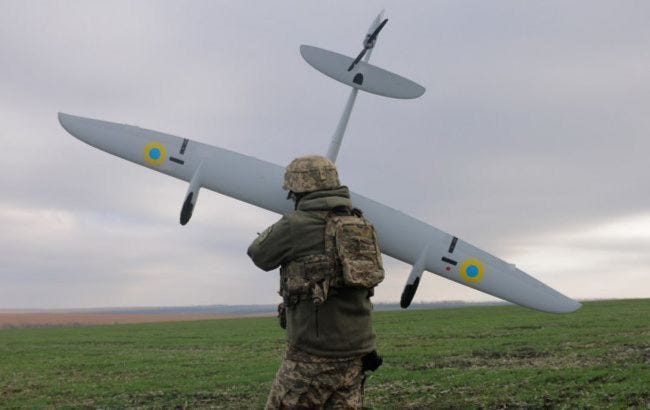
Russian-occupied Crimea completely suspends gas sales to civilians as Ukrainian drone strikes squeeze peninsula
Gas stations in Russian-occupied Crimea have been instructed as of June 21 to completely suspend sales of fuel to civilians, as Ukraine steps up medium-range drone strikes on energy infrastructure across the peninsula.
“Fuel will only be dispensed to state services that ensure the vital activities and security of the Republic of Crimea,” Sergey Aksyonov, the Russian-appointed governor of occupied Crimea, said in a video address on the morning of June 21.
The ban is effective as of 9 a.m. on June 21, Aksyonov added.
Read More: Kyiv Independent
Hegseth announces review of US forces in Europe and again criticizes NATO allies
US Defense Secretary Pete Hegseth doubled down on the Trump administration’s combative posture towards NATO on Thursday, announcing a six-month review of US forces in Europe and lambasting Washington’s allies for limiting their involvement in the war in Iran.
“This will be a real review. It will be designed to ensure that NATO is moving fast and irreversibly towards Europe stepping up to take primary responsibility for the defense of Europe,” he said at a meeting of the alliance’s defense ministers in Brussels.
The review will “examine America’s force posture and basing in Europe,” he said, as he sought to characterize it as a way to “transform NATO back into a real military alliance that’s focused on hard power and real deterrence.”
Read More: CNN
Ukraine Targets Oil Refinery 2,000 Kilometers Inside Russia
Ukraine targeted the Tyumen oil refinery in Russia’s Ural region, about 2,000 kilometers (1,240 miles) from the Ukrainian border, extending Kyiv’s campaign against Russia’s energy infrastructure.
Emergency crews were working at the site of the refinery where debris fell, with preliminary information indicating the plant wasn’t damaged and employees had been evacuated, Tyumen region governor Alexander Moor said in Telegram post.
The Tyumen refinery is one of Russia’s largest privately owned oil-processing plants. It can handle about 151,000 barrels of crude a day and is an important supplier of fuel to the domestic market.
Read More: Bloomberg
Zelenskyy gives Belarus a week to remove relay stations helping Russia
Ukrainian President Volodymyr Zelenskyy has given Belarus a one-week ultimatum to remove relay equipment on its territory that he says is helping Russia attack Ukraine, warning that Kyiv will otherwise intervene itself to halt the transmissions.
In a social media post on Friday night, Zelenskyy directly urged his Belarusian counterpart, Alexander Lukashenko, to “remove that equipment.”
“I think a week is enough for him to do that. … If he doesn’t do it, we will,” Zelenskyy said.
Read More: Politico EU
France probes whether botched arson and Belarusian ‘spotter’ arrested outside Ukraine drone supplier are linked
A factory owned by Delair, a French drone manufacturer that supplies Ukraine, was attacked with Molotov cocktails, the newspaper Le Parisien reported, citing unnamed sources.
The factory sits near Toulouse in southwestern France. Delair ranks among France’s leading drone manufacturers, making both civilian and military models. The company began supplying Kyiv after Russia launched its full-scale invasion.
The attack took place in early June. The Toulouse prosecutor’s office opened a criminal case on charges of property destruction that endangered lives, Le Parisien reported. The factory suffered almost no damage — the incendiary mixture failed to explode.
Two days later, on June 3, French authorities detained a 48-year-old Belarusian citizen who had been living in Spain — he was caught near the factory filming a drone prototype. Prosecutors say he sent a video to a contact in Russia and was found carrying “advanced equipment.” He had been spotted near the factory several times before his arrest. On June 5, he was formally charged with delivering information to a foreign power, collecting information with intent to deliver it to a foreign power, and criminal conspiracy. He was remanded in pretrial detention.
Read More: Meduza
Russia was behind arson attacks targeting PM, BBC reveals
Even after he set fire to Sir Keir Starmer’s house, Roman Lavrynovych - convicted on Monday of conspiring to commit arson - seemed to know as much about the prime minister as a bullet knows about its target.
His anonymous handler, known by the initials EL, gave a clue in a message: “Look, you attacked the home of a very high-ranking person in Britain. I’ll send you money, you need to leave the city.”
It was too late: Lavrynovych was arrested within hours.
The 22-year-old Ukrainian builder had been weaponised to target the UK’s head of government. But by who?
Our investigation has found the arson attack was just one part of an extensive campaign of sabotage, provocation and lies leading all the way to the Russian state.
The handler EL, who directed Lavrynovych, offered Russian citizenship in return for other attacks and glorified President Vladimir Putin, messages the BBC has uncovered show.
Read More: BBC
Ukraine pummels Russian capital with what may be largest drone strike yet on Moscow
After weeks of intensifying Russian bombing of Kyiv, Ukraine hammered Moscow with a swarm of drone strikes in what appeared to be the largest attack on the capital since President Vladimir Putin plunged the region into full-scale war in February 2022.
The dramatic strikes came two days after Ukrainian President Volodymyr Zelensky met President Donald Trump at a Group of Seven summit in France, putting Russia’s war back on the White House agenda after months of focus on its war against Iran.
Trump urged Russia to make a deal to end the war and decried the high number of soldiers being killed, but conceded there was no end in sight.
In remarks to journalists Thursday, Zelensky said the strikes on Moscow were retaliation for the recent attack on the Kyiv Pechersk Lavra, a church and monastery complex in central Kyiv regarded as one of the holiest Orthodox sites in the world.
Read More: Washington Post
Finland Lifts a Nuclear Weapons Ban, Eyeing an Uncertain World
Finnish lawmakers voted on Wednesday to overturn a Cold War-era total ban on nuclear weapons, which the Finnish government says will strengthen the NATO alliance but which could also risk heightening tensions with Russia.
Finland is not a nuclear state and has repeatedly said it does not plan to become one. Other NATO countries do have weapons, but until now Finland could not host them — either as a deterrent or to support the alliance in times of emergency.
With the change, Finland will allow its allies’ weapons to be imported into, transported through or held on its territory to defend Finland or assist NATO.
“The nuclear deterrence is, in the end, the guarantor of peace in Europe,” Heikki Autto, the chair of the defense committee in Finland’s Parliament, said in an interview on Wednesday. “It’s the ultimate deterrence against the Russian aggression.”
Read More: New York Times
Russian frigate fires warning shots at British yacht in Channel
A Russian warship fired warning shots within a few hundred metres of a British pleasure yacht sailing across the Channel on Tuesday morning amid a period of heightened tensions between London and Moscow.
The rare incident took place at 11.40am more than 20 miles south of the Isle of Wight and less than 40 miles north of Normandy, France, when the yacht, identified as the private vessel Bright Future, sailed close to the Admiral Grigorovich and ignored at least one warning.
British sources said initial indications were that more than one shot was fired by Russian sailors after the yacht had got close to the heavily armed frigate. “Following attempts to contact a British vessel in the channel, the Grigorovich fired warning shots. These were not aimed at the vessel and were an attempt to prevent a possible collision,” the Ministry of Defence said.
Read More: The Guardian
Russia’s shadow looms behind several sabotage and espionage attempts on French soil
While Russia has been entangled in its war against Ukraine since February 2022, it has continued what the French Interior Ministry calls “its strategy of chaos,” combining subversive operations, disinformation and the pursuit of dissidents across Europe. Until recently, unlike the United Kingdom, Germany or Poland, France had been relatively spared from acts of sabotage on its own soil. That is no longer the case: France has reportedly been targeted three times since January. Two cases are currently before the courts, while another remains under investigation via administrative channels.
Read More: Le Monde
Magyar Purges Orbán-Era Spy Chiefs, Names Russia Hybrid Warfare Expert
Hungary’s new government led by Péter Magyar has dismissed every Orbán-era director-general of the country’s intelligence agencies. Tapped to oversee the sweeping shake-up is Péter Buda, a respected former counterintelligence officer and outspoken critic of Orbán’s pro-Russian foreign policy.
In a dramatic shake up, Péter Magyar’s new Hungarian government has sacked all of the directors-general of Hungary’s intelligence agencies who served under Orbán. New heads are being appointed gradually, but the most important move is that Péter Buda — a widely respected national security professional whom independent Hungarian media and VSquare have quoted extensively in recent years — has been asked to take up the role of strategic oversight of all Hungarian national security agencies, a position in some respects resembling that of the US Director of National Intelligence.
Read More: VSquare
Eyes On The Crew: The Russian Watchmen Aboard Moscow’s Sanctioned ‘Shadow Fleet’ Tankers
With his shaved head, thick neck, and heavy jaw, Andrei has the look of a man built to intimidate.
His professional background matches that impression. Andrei’s resume describes him as a former commander in an elite Russian airborne unit who served in “combat operations” in Chechnya, worked as a personal bodyguard, and later held senior corporate security roles.
More recently, however, he had an altogether different mission: ensuring that tankers carrying sanctioned Russian oil reached their foreign destinations.
His job, he says, was to “to watch, to report in a timely manner — and, let’s say, to not allow the vessel to deviate from its course.”
Strained by its grinding war on Ukraine, Moscow desperately needs this so-called “shadow fleet” of aging and opaquely-owned vessels to keep delivering its oil to clients around the world. In March, an investigation by OCCRP, Delfi Estonia, Helsingin Sanomat, and iStories laid out in detail how Russian crew members with security backgrounds, like Andrei, were covertly being placed on board alongside largely foreign crews.
Though often listed as “technicians” or “supernumeraries” on crew lists, their backgrounds are already an indication that they were not normal sailors. A combination of leaked data and open-source research shows that many are veterans of the Russian military, private military companies, or former state security personnel.
Read More: OCCRP
Not-so-secret services: One of Russia’s most highly classified officials has a social media problem
Top-secret FSB counterintelligence documents obtained by The Insider show that since the start of Russia’s full-scale war in Ukraine, foreign intelligence activity targeting the “carriers” of Russian state secrets has seen a notable increase. According to the Kremlin’s spycatchers, these “recruitment approaches” often take place during foreign business trips. Notably though, a growing share of intelligence activity is conducted online. The Insider examined how well Russia protects its state secrets by examining the case of Andrei Kazakov — the head of the Kremlin’s records office. In a strange coincidence, a few days before our findings were ready for publication, Vladimir Putin dismissed Kazakov from his post. As it turned out, the entire life of Russia’s top “secret carrier” was publicly available on his social media accounts.
Read More: The Insider
Exiled Russian artist known for anti-Putin cartoons shot dead in Poland
A Russian artist best known for his unflattering caricatures of President Vladimir Putin was shot dead in Poland, prosecutors said Tuesday, adding that two Belarusian men were arrested in connection with the killing.
Semyon Skrepetsky, 44, was killed in a suspected execution on Monday morning in a parking lot near his home in Biała Podlaska, a town that sits near Poland’s border with Belarus, the Polish Prosecutor’s District Office in Lublin said in a statement.
Read More: CNN
EU Citizen’s Company Sent Sanctioned Equipment to Russian Defense Firms
The findings expose a vulnerability in EU export controls allowing companies in intermediate countries to ship critical technology. While the EU bans direct and indirect sales to Russia, experts say it is hard for E.U. manufacturers to know if their products end up there. They may sell to firms operating in countries that have not imposed sanctions, which then export the goods to Russia.
A co-owner of Redwing Metal denied the company has shipped sanctioned goods to Russia. AMR and SMK didn’t respond to requests for comment regarding the shipments.
The trade data shows that Italian-made CNC lathes used for shaping metal were among the European goods exported to Russia via Turkey.
“It is impossible to buy items such as CNC machines directly from the E.U. for delivery to Russia — in this case, sanctions are effective,” said Roman Steblivskyi, director of Policy and Advocacy at the Economic Security Council of Ukraine (ESCU).
But “countries such as Kyrgyzstan, Uzbekistan, Hong Kong, and Turkey have no sanctions against Russia, making it far easier for companies based there to procure and re-export such goods,” he said.
Read More: OCCRP
What a different feel Olga's Russian Digest has now that 💪🏼Ukraine can take the fight to Russia.
Please keep this coming!