
Russian Digest
Weeks of June 29 & July 6: Top Stories I'm Keeping an Eye On

Quick note: I was traveling last weekend, so this week's digest covers the top Russia stories from the past two weeks.
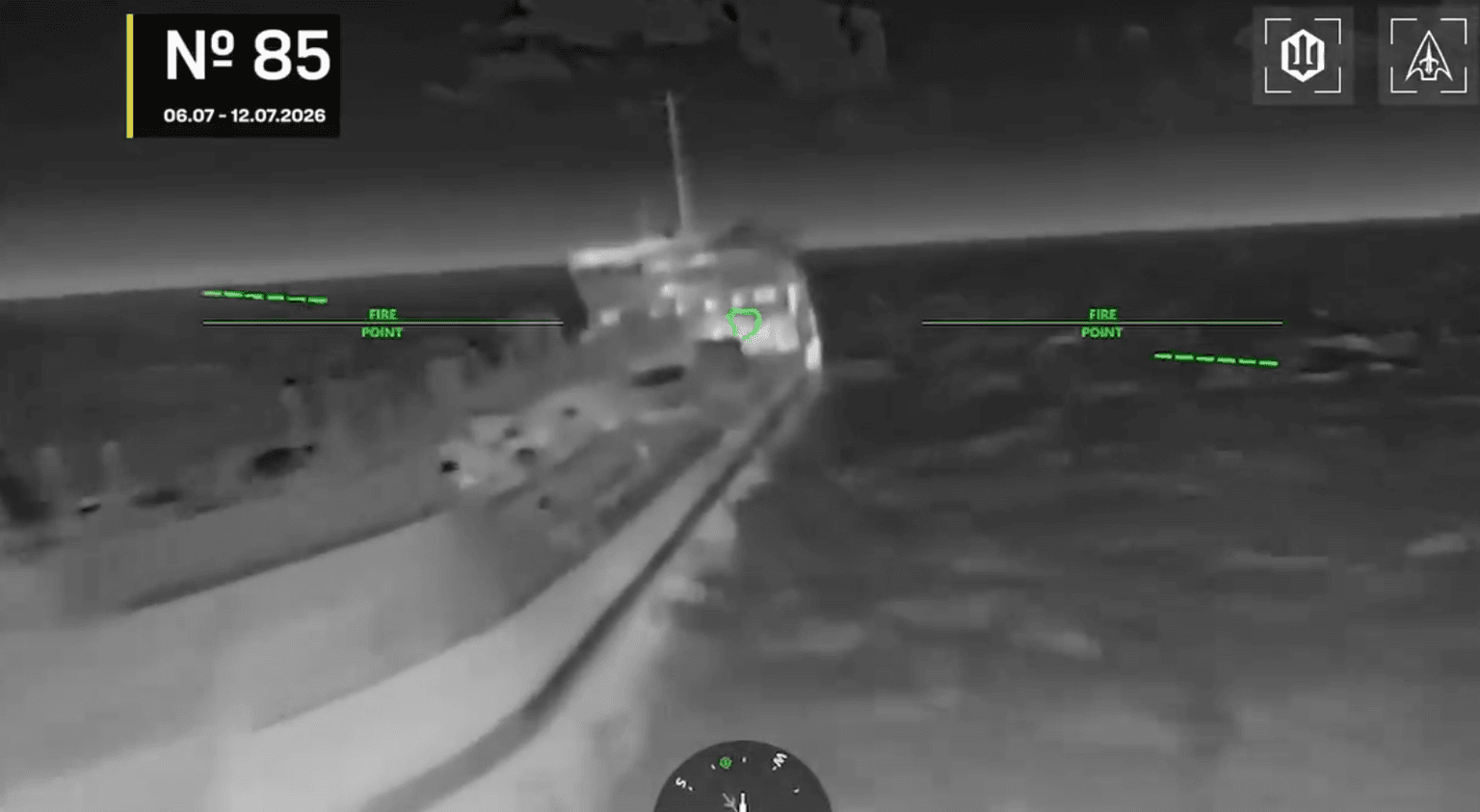
Ukraine says it eliminated 14 more Russian shadow fleet vessels overnight
Ukraine says it destroyed 14 more Russian vessels overnight on July 12th as Kyiv continues to eliminate Russia’s shadow fleet in a bid to choke funding for Moscow’s war machine.
Robert "Madyar" Brovdi, commander of Ukraine's Unmanned Systems Forces said that his team had destroyed 10 tankers and four ferries, bringing the total number of destroyed Russian shadow fleet vessels to 90 units this week alone.
He noted that a Russian tanker, tugboat, cargo ship, or other vessels in the Azov Sea was hit every 112 minutes during the week.
Read More: Kyiv Independent
Ukraine’s Drones Are Now Reaching Siberia and Imperiling Russian Energy Assets
Several Ukrainian drones circled over Russia’s largest refinery on Monday and then, one after another, slammed into its crude distillation unit, engulfing the facility in fireballs and clouds of smoke. There was no air defense to speak of because Russian authorities had assumed that the refinery, in the Siberian city of Omsk, was too far from Ukraine to be imperiled.
The hit, which triggered Wednesday’s ban on diesel exports and intensified Russia’s monthlong fuel crisis, marked a major expansion in the range of Ukraine’s deep strikes. Until now, they have been confined to European Russia, within some 1,000 miles of Kyiv-controlled territory. But Omsk lies nearly 1,500 miles away in a straight line, and the drones flying there had to take a longer, more circuitous route to avoid air defenses.
Ukrainian drones used in this operation have a maximum range of 2,100 miles, according to the manufacturer, Fire Point. This means that a vast additional swath of Russia, including the core of its oil-and-gas industry in western Siberia, and hundreds of key military installations, will also need to be protected from Ukrainian air raids—when Russia’s air defenses are already stretched thin by Kyiv’s relentless drone and missile campaign.l gas.
Read More: Wall Street Journal
Former Ukrainian Captives Tell of Torment at Hands of Russian Prison Doctor
Dozens of Ukrainians returning from Russian captivity accused their prison doctor of subjecting them to systematic sexualized and psychological torture and refusing treatment for acute diseases. Reporters set out to find him.
In the summer of 2023, a virulent scabies epidemic broke out in Prison Colony No. 7, deep in the Russian heartland.
The infestation, caused by mites that trigger intense itching and a red rash, took an especially serious turn for Ihor Shyshko, a Ukrainian prisoner of war.
“It was all spreading into my eyes,” he said, recalling his decision to try to obtain medical treatment. “I thought I should ask, maybe they’d give me brilliant green [antiseptic dye], maybe I’d smear it on, maybe it would somehow stop it.”
Instead, Shyshko recalled, the prison doctor used the dye not as treatment, but as a weapon of sexual humiliation — painting his body and then summoning others to look.
Read More: OCCRP
Dutch spy agencies: Russia hacked cameras to spy on military routes
Russian hackers compromised internet-connected cameras, including a small number along military routes in the Netherlands, Dutch intelligence agencies reported. The breaches allowed Russia to gather intelligence on military transport routes and defense equipment being delivered to Ukraine.
The findings come from a joint investigation by the General Intelligence and Security Service, or AIVD, and the Military Intelligence and Security Service, or MIVD. The agencies said the hackers targeted IP cameras, which can be accessed and viewed remotely over the internet. The systems included cameras used by businesses.
Source: NL Times
Hegseth Prepared a Bombshell Plan to Cut Troops in Europe. Then It Got Nixed.
Defense Secretary Pete Hegseth was planning to head to Brussels last month to deliver what would be a bombshell announcement in a meeting with the North Atlantic Treaty Organization’s top military chiefs.
The U.S., he planned to say, was preparing additional cuts to its forces in Europe that would go beyond the canceled deployment of an armored brigade to Poland and the earlier withdrawal of an infantry brigade from Romania, people familiar with the matter said. But Hegseth’s proposal was nixed after it was shared with Marco Rubio—President Trump’s national-security adviser—and other senior officials, the people said.
Instead, Hegseth said the U.S. would conduct a review of its force posture in Europe that could last as long as six months.
Read More: Wall Street Journal
Russia’s largest oil refinery halts processing after drone attack, sources say
Omsk oil refinery, Russia’s largest, has halted operations following a Ukrainian drone attack, two industry sources said on Tuesday.
Monday’s strike on the refinery, deep in Siberia, was one of Ukraine’s longest-range attacks of the conflict, now well into its fifth year.
The halt in operations at the plant, which is Russia’s top producer of petrol, is likely to exacerbate fuel shortages across the country.
Read More: Reuters
Russia’s gasoline output covers 65% of demand after Ukrainian strikes
Russian gasoline output fell to a level equivalent to only around 65% of the seasonal average consumption after Ukrainian drone attacks led to stoppages at large oil refineries, according to two industry sources and Reuters calculations.
Ukraine has intensified its attacks on Russia’s energy infrastructure, including large oil refineries, to try to undermine Moscow’s war efforts.
As fuel has run short and drivers are queuing to fill their vehicles, Cossacks, who have in recent years been used to back up police, have helped to maintain public order at some filling stations.
Read More: Reuters
Long Lines for Gas Shatter the Illusion of Normalcy in Wartime Russia
Alyona Sadovnikova first experienced gasoline shortages in mid-June, when she pulled into a station and was told it was only serving customers who had ration coupons.
“I was horrified: Are we in the Soviet Union now where you had to get coupons to buy sausage?” she said in a telephone interview.
Just a few days later, Ms. Sadovnikova found herself waiting 18 hours to fill up in the city of Irkutsk, in eastern Siberia, almost 3,000 miles from the Ukrainian border.
As Ukraine escalates its attacks on Russian oil infrastructure, including some deep into Russian territory, refineries across the country have been forced to shut down for lengthy repairs.
Read More: New York Times
“Hybrid War Over Our Own Democracy and Sovereignty”: How Vučić and Putin Targets Serbia’s Civil Society
A Russian cyberespionage operation spent a month inside a Belgrade think tank’s inboxes, reading 28,000 emails after posing as a Belarusian dissident to get in. Tied to the SVR and GRU, the hackers weren’t just after documents — they walked away with a blueprint of relationships and vulnerabilities that AI can weaponize. As Serbia heads toward elections, the attack reveals a darker pattern: Moscow and Belgrade often chase the same enemies.
Serbia, which has seen almost two years of protests following the collapse of a canopy at the Novi Sad railway station in November 2024, is expecting elections later this year according to president Aleksandar Vučić’s latest statement. These protests have been met with intimidation and suppression and those in power in Serbia are expected to crack down further rather than relinquish it. Many of the tactics used today are borrowed from, or deployed directly with the help of, Russia.
Read More: VSquare
How Putin Turned Japan Into a Den of Spies
Soon after troops invaded Ukraine in February 2022, Western leaders expelled hundreds of Russian spies from their capitals and blacklisted companies with ties to the Kremlin.
The coordinated effort was intended to make it harder for the Kremlin to collect intelligence and buy equipment like microchips, transmitters and the machinery used to make weapons.
Since then, officials say, dozens of those banished spies have turned up in an unexpected place: Japan.
The country’s weak espionage laws and flourishing high-tech industry have made it a crucial piece of the Russian war effort. Ninety percent of Russian missiles and drones contain Japanese components, according to Ukrainian government estimates.
Read More: New York Times
Italy busts Russian spy ring collecting data on Ukrainian air defense vulnerabilities
Russia has told one of its spies in Europe to find out more about air defense capabilities western nations are sending to Ukraine, Italian investigators have reported after breaking up an alleged espionage ring in Rome.
Police who filmed and wiretapped an alleged Russian military intelligence officer quizzing an accused informant in Italy heard him demanding information on systems like Europe’s Samp-T, which has been given to Kyiv, and the Michelangelo Dome, an air defense system developed by Italy’s Leonardo due to be tested in Ukraine in November.
Read More: Defense News
Russia waged a drone campaign in Europe, likely using shadow ships, report says
Russia likely used shadow ships to launch drones over Europe that repeatedly disrupted civilian aviation, as it monitored military sites and tested the air defenses of NATO nations, according to a report published Thursday by the International Institute of Strategic Studies think tank.
The report, which was shared before publication with The Associated Press, plotted 144 suspected drone sightings across Europe, including in NATO members Germany, France, Belgium, the Netherlands, the U.K., and Denmark, between 2024 and 2026.
Those sightings peaked in late 2025, forcing the temporary closure of several European airports, including in Germany, Spain and Denmark.
Danish Prime Minister Mette Frederiksen described the incidents in her country as the “most serious attack on Danish critical infrastructure to date.”
Read More: Associated Press
On Board NATO’s Arctic Aircraft Carrier Hunting for Russian Threats
Amid growing Russian threats in the Arctic, the U.K. Royal Navy has deployed its flagship aircraft carrier to deter Moscow’s incursions into strategic waterways.
As a sign of the tension in the area, in early July, a Russian plane flew close to the carrier and dropped a large number of sonar trackers in its path, before British F-35 jets scrambled to escort the plane away.
Watch: Wall Street Journal
Russia Weaponizes Civilian Tanker in Baltic Sea, Surveillance Images Show
Surveillance photographs obtained by journalists reveal that the Kremlin has mounted heavy machine guns on a civilian tanker that delivers critical energy supplies to Kaliningrad, Russia’s exclave on the Baltic Sea.
Reporters also identified two dozen “passengers” on the civilian ship who have a background in the Russian military.
The Marshal Vasilevskiy is not a normal tanker, and it is unique to the Russian energy fleet. The vessel does not simply deliver liquified natural gas (LNG) from one point to another. Instead, it has the capability to convert super-cooled LNG back to its gaseous state. When LNG is needed, it can reconvert that gas into LNG and offload it.
Read More: OCCRP
‘Moscow will fall’ — 13 Russian power stations shut down across occupied Ukraine, military says
Ukraine’s Unmanned Systems Forces (USF) struck 12 power substations and one gas distribution station in Russian-occupied territories during a 48-hour operation on July 1-2, USF Commander Robert “Madyar” Brovdi reported on July 2.
The operation shut down energy facilities in occupied Crimea as well as in the occupied parts of Ukraine’s Donetsk, Luhansk, and Zaporizhzhia oblasts, Brovdi said.
The report comes amid Ukraine’s intensifying summer campaign against Russian logistics and infrastructure in occupied Crimea — a campaign intended to isolate the peninsula from mainland Russia and cut off crucial military supply routes.
Read More: Kyiv Independent
Russia shuts railway border crossings with Finland, Estonia and Latvia
Russia on Wednesday shut down traffic through some of its last remaining railway border crossings with the European Union.
The move, announced in a government order on Tuesday evening, suspends all movement of persons, vehicles, goods, and cargo by rail with Finland, Estonia and Latvia from July 1. The Foreign Ministry has formally notified the Baltic nations of the decision, but offered no explanation for the “temporary” closures, nor any indication of when they might be lifted.
The affected checkpoints and crossings with Finland include St. Petersburg’s Finland Station, Vyborg and Svetogorsk in the Leningrad region, and Värtsilä and Lütta in Karelia. Pechory on the Estonian frontier and Pytalovo near Latvia are also closed.
Read More: Politico EU
Bloodier than Stalingrad: Number of casualties in Russia’s war on Ukraine reaches 2 million
Russia’s decision to launch a full-scale invasion of Ukraine has now cost the country some 450,000 lives, according to a new study that estimates the war’s total casualty numbers to have surpassed 2 million.
The research by the Center for Strategic and International Studies (CSIS) estimates Russia has suffered 1.4 million casualties, including killed, wounded and missing soldiers – a stunning number that amounts to roughly 1% of the country’s population.
The losses are not spread evenly across Russia, with poorer areas and ethnic minorities suffering significantly higher casualty rates. Stories of male populations of small remote villages being virtually wiped out are becoming more common in Russian opposition media. And according to the study, Russia is currently unable to recruit new troops at the same rate as it is losing them.
Read More: CNN
Russian disinformation surge may be connected to upcoming Baltic elections
An uptick in Russian disinformation aimed at NATO’s eastern flank could be linked to Latvia and Estonia’s upcoming parliamentary elections, experts say.
Russian information attacks against the Baltic states, as well as Finland and Poland, have increased recently, Minister of Foreign Affairs Margus Tsahkna (Eesti 200) said.
Russia claims Estonia, Latvia and Lithuania are allowing Ukraine to use its airspace for drone attacks against Russian oil infrastructure on the Baltic coast. This has been denied by all three countries.
“Not only in the media, but also through diplomatic channels on Russia’s part – they want to show that, look, the Baltic states are dragging NATO into a war against Russia. But this is yet another attempt to create confusion,” Tsahkna said.
Read More: ERR
Russia Is Trying to Groom AI Into Repeating Its Lies

For more than a decade, Russia’s digital information war has followed a familiar playbook. Coordinated narratives spread across social media, fake news sites and troll farms amplify them, and Kremlin narratives are laundered via Western shills, influencers, and fringe media until they appear to be legitimate reporting. Sometimes the objective is to convince millions of people to believe Russia’s lies. Other times, particularly during influence operations designed to overwhelm rather than persuade, the goal is to flood the information space with so many contradictory stories that people give up trying to figure out what’s true. Which tactic the Kremlin chooses depends on the target audience and objective.
WOW!!! A waterfall of information! I am so appreciative of your work.
(Guess you're not reporting on the speculation that Russia had lindsey g. poisoned while he was in Kiev, a day before his death. It's not believable, but people are having fun posting about it.)
It looks like Hegseth is a Russian asset, pissed because he got cashiered and was not selected for 0-5, Lt Col
The Sound around Guadacanal is known as Iron bottom bay, because of all of the allied ships that were sunk there.
The Savo Sound (Iron bottom bay) is deeper than the Azov sea
The Sea of Azov has an average depth of just 7 meters (23 feet), making it the shallowest sea in the world. Its maximum depth is only about 14 meters (46 feet), with large areas in the bays and the northern gulf dropping to 1 meter (3 feet) or less.
Sink enough ships at the right location and the Azov sea becomes impassable, for Russia's ghost fleet or any war vessel.