
Russian Digest
Week of 5/25/26: Top stories I'm keeping an eye on

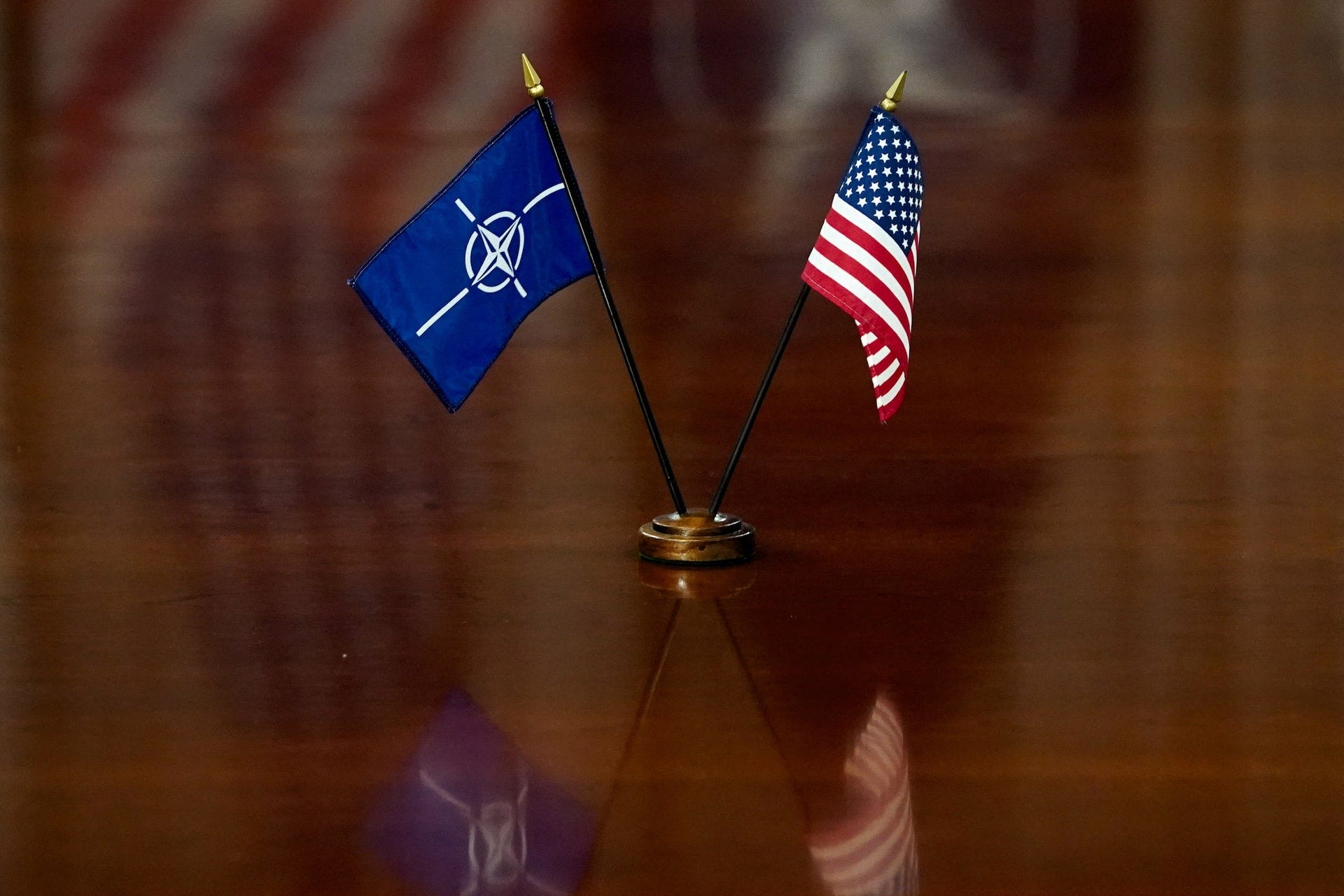
US to pull jets, destroyers and submarines from NATO as part of European drawdown
Washington told allies it will gradually scale down the number of strategic bombers, fighter jets, drones, submarines and warships dedicated to NATO as it continues pressing Europe to do more for its own defense.
The announcement was made in a closed-door meeting of NATO policy directors on Friday by Pentagon adviser Alexander Velez-Green, according to two alliance diplomats who were granted anonymity to speak freely.
The reductions reflect a long-running effort by U.S. President Donald Trump to pare back America’s role in an alliance he has repeatedly criticized as useless to Washington.
Read More: Politico and Reuters
Trump Moves to Cut NATO Bombers, Submarines, and Warships in Major Win for Russia

Since returning to office, Trump has repeatedly delivered gifts to Vladimir Putin by attacking NATO allies, pressuring Ukraine to surrender, undermining sanctions, issuing waivers for Russian oil exports, helping bring Russia back from pariah status, and steadily normalizing relations with Moscow — advancing Putin’s interests as he has done over the past decade.
NATO members condemn Russia after drone slams into Romania apartment building, wounding two
An explosive-laden Russian drone hit an apartment building in Romania early Friday, injuring two people, its government said, as Moscow’s forces attacked a nearby Ukrainian port.
The strike drew swift condemnation from the European Union and NATO, with US Ambassador to NATO Matthew Whitaker calling the strike a “reckless incursion.”
“We will defend every inch of NATO territory,” he said on X.
Meanwhile, Bucharest is urging its allies to help with its anti-drone defenses, tapping into growing concerns that Russia’s war in Ukraine could spill deeper into the continent.
Read More: CNN
Lithuania says Russia can falsify GPS signals up to 280 miles deep into the EU’s borders
Lithuania’s communications regulator said Russia has expanded its ability to spoof GPS signals in Europe. Russia can now interfere with signals deep into European territory at a radius of up to 450 kilometers (280 miles) from the border of the Kaliningrad Region, Darius Kuliešius, deputy head of the agency, told Reuters.
Kuliešius said that at the start of 2025, there were only three antennas on the border of the Russian exclave capable of “spoofing” — or falsifying — GPS signals. There are now 36, a twelvefold increase. He called the interference with GPS signals a “systemic, permanent, unending Russian provocation against European security.”
The range named by the official – 450 kilometers – includes all of Lithuania, major cities such as Riga and Warsaw, and southern Estonia. To the northwest, it reaches Sweden’s coast, and to the west, the Polish-German border.
Read More: The Insider
GPS jammed on RAF jet carrying UK defence secretary close to Russian border
An RAF jet carrying the defence secretary, John Healey, had its signal jammed for the entire three-hour flight after it flew near the Russian border.
Healey had been visiting British soldiers in Estonia and was travelling back to the UK when the electronic attack happened, the Times reported.
It is thought Russia was behind the incident on Thursday.
Smartphones and laptops were unable to connect to the internet and pilots had to use a different navigation system as the plane’s GPS was disabled.
It is unclear if Healey was deliberately targeted but the flight path was visible on aircraft tracking websites.
Passengers, who included photographers and a reporter, were told the Dassault Falcon 900LX aircraft could still operate safely.
Read More: The Guardian
Putin adviser threatens European diplomats in Kyiv: ‘Trim the headcount’
Dmitry Medvedev, the deputy chair of the Security Council of Russia and the country’s former president, threatened European Union diplomats in Ukraine’s capital of Kyiv.
“The EU has said it will maintain its diplomatic presence in Kiev unchanged, despite Russia’s warnings. Well, apparently they’ve got diplomats to spare and need to trim the headcount,” Medvedev said in a post on the social platform X on Tuesday morning.
On Monday, the Russian Foreign Ministry pushed foreign nationals to leave Kyiv in the wake of Russian forces undergoing a large-scale attack on the city.
Read More: The Hill
Russia hits Kyiv with hypersonic ballistic missile in ‘deranged’ attack
Russia used its powerful hypersonic Oreshnik ballistic missile for a third time in Ukraine as part of a massive attack on Kyiv and its surrounding region that killed at least four people and injured about 100.
Russia hit the city of Bila Tserkva in the Kyiv region with the missile, Ukraine’s president, Volodymyr Zelenskyy, said. He described a heavy Russian assault that also hit a water supply facility, burned down a market and damaged dozens of residential buildings and several schools.
“They are genuinely deranged,” Zelenskyy said on Telegram.
Adding further details on Sunday, Zelenskyy wrote on X that about 100 people had been injured across the country and four had died as a result of the Russian attack, which he said had hit Kyiv the hardest.
Read More: The Guardian
Ukrainian drones control airspace over Russian logistic routes in occupied Luhansk Oblast, 3rd Army Corps says
Ukrainian drones have gained control over key Russian military supply routes in occupied parts of Luhansk Oblast, the Third Army Corps said on May 31 on Facebook.
“Luhansk Oblast is now under the control of drones from the Third Army Corps!” the statement read.
The development comes after pro-Russian media, citing Russia’s Defense Ministry, claimed in April 2026 that Luhansk Oblast — parts of which have been contested since 2014 — had been fully occupied by Russian forces. The Third Army Corps later rejected those claims.
Read More: Kyiv Independent
Ukraine hammers Russia’s land corridor to Crimea
Ukrainian drones are hitting trucks on key roads in the occupied south of the country used by Russia as a land corridor to Crimea, posing a growing challenge to Moscow’s ability to resupply its troops.
The attacks are the result of a change in strategy by Ukraine thanks to its growing ability to produce drones with a range of 100 kilometers to 300 kilometers — so-called mid-range — able to hit Russian targets well behind the front lines.
“We’re launching logistical lockdown for the Russian army and increasing middle strike capabilities to destroy Russian military power deep behind the frontlines,” Ukrainian Defense Minister Mykhailo Fedorov said in a statement on Wednesday. “Our goal is to increase pressure on Russians to make them stop assault operations.”
Read More: Politico EU
UK targets Russian crypto networks in latest sanctions
Britain on Tuesday targeted Russia-linked cryptocurrency platforms, banks and financial networks that it said were used to bypass sanctions, freezing their assets and barring UK firms from processing payments and holding correspondent banking ties.
The measures focus on what London described as “shadow financial systems” underpinning Russia’s war economy, including the Kremlin-backed A7 network, which it said had been used to route funds, finance procurement and exploit foreign banking systems to evade restrictions.
Read More: Reuters
Russian news agencies have begun reporting much less about Putin. He has almost completely stopped traveling around the country and abroad.
Since the beginning of 2026, state news agencies TASS and RIA Novosti, as well as Interfax, have sharply reduced the number of news stories about Vladimir Putin, according to the Agency’s calculations.
In February, TASS mentioned Putin on its Telegram channel 166 times, compared to 387 mentions a year earlier; in March, 235 times (a year ago, 506); in April, 262 times (a year ago, 429).
RIA Novosti mentioned Putin 129 times in January, compared to 207 times in the same month a year ago. In February, the agency’s Telegram channel published 105 news items mentioning Putin, compared to 328 in February 2025.
Interfax’s Telegram channel published 31 posts about Putin in February, while the agency reported on him 109 times in a month the previous year.
The number of publications began to decline immediately after Russian authorities announced a Ukrainian drone attack on Putin’s residence in Valdai. The authorities announced the attack in late 2025. Ukraine dismissed the reports as “lies,” and US President Donald Trump said he did not believe such a strike took place. A source close to the Kremlin told Proekt that Putin was deeply concerned about his safety at the time.
Source: Meduza in Russian
Trump’s Ballroom Commissioner Heads to Russia's Economic Forum
Rodney Mims Cook Jr., chairman of the U.S. Commission of Fine Arts and a Trump appointee, plans to attend the St. Petersburg International Economic Forum for Putin’s keynote address. Cook also reportedly plans to meet with sanctioned Russian Culture Minister Olga Lyubimova, becoming the first known U.S. government representative to attend the forum in several years.
Trump’s Ballroom Commissioner Heads to Russia's Economic Forum

For years, the St. Petersburg International Economic Forum was one of Vladimir Putin’s prized spectacles: a carefully choreographed show meant to project the image of a “powerful,” globally connected Russia open for business and relevant on the world stage. But after Russia’s full-scale genocidal invasion of Ukraine, Western leaders largely disappeared, and SPIEF increasingly became a networking event for authoritarian governments, sanctioned actors, Taliban thugs, and anyone else still willing to do business with what had become a global pariah state.
Enter the Killer Robots: The Ukrainian Forging the Future of Warfare
As Ukraine’s 35-year-old defense minister strolled about in tennis shoes, jeans and a fleece, gazing at displays of his country’s latest crop of oddball weapons, he paused to eye one gigantic, ungainly new device.
It was a drone with muscular carbon fiber arms stretching eight feet to each side, propellers the size of scythes, and a sprawl of wires, protruding antennas and Velcro straps. The drone substitutes for a 155-millimeter howitzer, carrying shells to targets and dropping them.
“Can you make it bigger?” the minister, Mykhailo Fedorov, asked the drone’s developers during a recent defense exhibition. They were working on it, they replied.
The future of warfare is being written in Ukraine, and Mr. Fedorov, a technology evangelist who is four months into his job, is one of its authors.
Read More: New York Times
Leaked Documents Reveal Russian ‘Cognitive Strikes’ Against the West — Including Islamophobic ‘Pig Head’ Attacks in Paris
In September 2025, nine mosques and cultural centers in and around Paris were targeted with a grotesque Islamophobic stunt: Bloody severed pig heads, each marked with the word “Macron” in blue ink, were left outside their front doors.
A few months later, three men from Serbia were convicted of the crime in their home country. They had been directed, the verdicts read, by “structures of the intelligence service of the Russian Federation” in an effort to incite unrest and intolerance.
Now, a cache of leaked documents obtained by reporters from Delfi Estonia and shared with OCCRP and other media partners pulls back the curtain on that provocation. The files showcase the meticulous internal planning that went into the operation, shed new light on who was behind it, and unveil a swathe of other pro-Kremlin influence efforts across Europe and beyond.
Read More: OCCRP
How a Tiny Baltic Nation Is Preparing for Possible War With Russia
Across Estonia, on NATO’s eastern border with Russia, preparing for potential war has become a part of everyday life.
In Tartu, a large university city in the country’s east, city planners conducted drills on mass evacuations and sudden attacks on city hall. They are setting up short-term emergency shelters for 100,000 people by 2028. Heads of kindergartens are given specialized crisis training and emergency supplies with radios, first-aid kits and portable stoves.
High schools across the country are teaching students how to operate drones. And in eastern Estonia and neighboring Latvia, thousands of soldiers from across the North Atlantic Treaty Organization conduct an annual large-scale military exercise with heavy military equipment—and hundreds of drones.
Read More: Wall Street Journal
This is very helpful. Thank you!
The world can't find someone to put that old rabid dog out of his misery?