
Russian Digest
Week of 6/22: Top stories I'm keeping an eye on

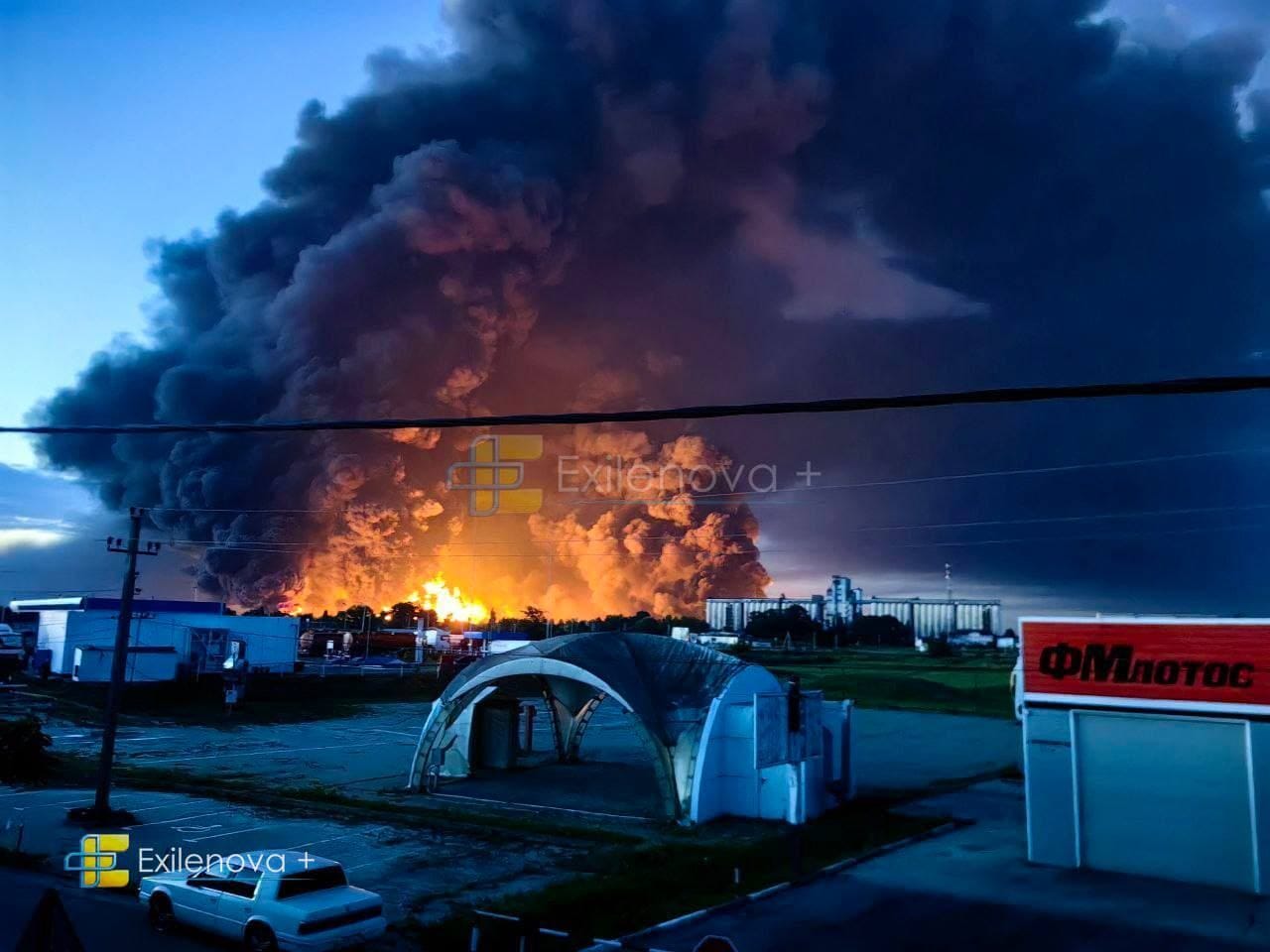
Unease deepens in Russia as Ukraine steps up long-range strikes
The Kremlin is scrambling to respond to an intensifying campaign of Ukrainian drone attacks reaching ever deeper into Russia, hitting key arms production facilities, destroying an ever-greater share of oil-refining capacity, and causing fuel shortages across the country.
This week alone, swarms of Ukrainian drones hit oil facilities across Russia as well as the VZPP-S semiconductor devices plant, a major producer of components for Russian ballistic missiles in Voronezh, the Dubna Satellite Communications Center near Moscow, and a chemical plant that is key for producing Russian ammunition in Tula.
Read More: Washington Post
Power outages, fuel bans and no summer camps: Crimea placed under state of emergency as Ukraine steps up pressure on Putin
Russian-installed authorities declared a state of emergency in Crimea on Friday, as repeated, intensified Ukrainian strikes on the peninsula lead to widespread power outages and fuel shortages.
Blackouts have plagued Sevastopol, the largest city in Russian-controlled Crimea, for days.
The Kremlin-installed governor of the city, Mikhail Razvozhayev, said Friday that restrictions to electricity supply would continue because repair work to the power grid had been suspended following air raid alerts prompted by Ukrainian drone activity.
Read More: CNN
Russia preparing possible ‘provocation’ in Baltic states or Poland, sources say
Two countries on Nato’s eastern flank have warned that Russia is preparing a possible “provocation” in the Baltic states or Poland in an effort to test the cohesion of the western military alliance.
Western sources also fear there could be danger on the horizon because the Kremlin is coming under pressure from Ukraine’s campaign of long-range attacks on targets near Moscow and St Petersburg.
On Monday, Latvian intelligence said: “We see indications that Russia is preparing military provocations against the Baltic countries or Poland.” However, it would be well short of a full-scale attack.
A senior political source from a second Nato member made a similar statement last week. They said “we are picking up intelligence” that Vladimir Putin was “planning something against the Baltic states”.
Read More: The Guardian
France seizes ‘shadow fleet’ tanker, stepping up pressure on Russia
France’s navy seized another tanker it said was linked to Russia’s “shadow fleet” on Thursday, underscoring the escalation this year in European efforts to enforce sanctions and squeeze one of Moscow’s main revenue streams.
Nine suspected shadow fleet tankers, vessels shipping oil and gas to skirt Western sanctions, have now been seized across Europe since the start of 2026, including four by France. Britain seized an oil tanker in the English Channel on June 14.
Read More: Reuters
What the West Still Doesn't Understand About Russia

Over the past few months, Western media have been flooded with headlines speculating that Vladimir Putin is under growing pressure, that a coup may be brewing, or that his grip on power is finally beginning to weaken. As Ukraine continues raising the costs of Russia’s genocidal war, systematically exposing vulnerabilities the Kremlin spent decades trying to hide, many are once again asking the same familiar questions: Could the regime be approaching a breaking point? Who might eventually replace Putin? And what comes after him?
Russian lawmaker threatens to ‘blow up half of Finland,’ says country turning into ‘second Ukraine’
A member of the Russian State Duma accused Finland of becoming “a second Ukraine” on June 27, warning that Moscow has the military might to destroy half the country.
The threats came a day after Finland announced plans to partner with the U.S. defense firm Lockheed Martin to build Europe’s first maintenance center for multiple-launch rocket systems (MLRS) in the city of Tampere.
Read More: Kyiv Independent
All quiet on the eastern flank? Nato leaders fear they can no longer rely on US help if Russia attacks
nightmare scenario has been playing on eastern European minds with increasing intensity since Donald Trump returned to the White House: what if Russia attacks and the US does not join the fight?
On the rare occasions the question is posed out loud, nobody much likes the answer. In mid-May, at a gathering in Tallinn, the US undersecretary of state Thomas DiNanno was asked directly whether American troops would fight if Russia invaded the Baltic states. He shifted uncomfortably in his chair, then gave a meandering answer. It did not include the word “yes”.
Read More: The Guardian
Russia used Israeli firm’s tool to crack phone months after ties severed, report finds
Russian authorities used tools from the Israeli company Cellebrite to break into the phone of a political prisoner, months after the company said it cancelled its contracts with Russia, an investigation by the University of Toronto’s Citizen Lab research unit has found.
The case raises questions about how much control Cellebrite has over its own software, which allows users to easily break into phones and examine their contents. The tools are sold worldwide and widely used by police forces in the UK and the US.
Read More: The Guardian
Russia’s Wiki Warfare Tries to Distort Reality, Documents Show
Russian influence operators called it Project 2026. The plan wasn’t just to spread fabricated stories on social media platforms. It outlined efforts to create an alternative information ecosystem.
Leaked documents from a private Russian agency reviewed by Bloomberg News reveal plans to build a sprawling network of Wikipedia-style reference sites, media outlets and phony think tanks to shape how people and AI chatbots understand political issues.
The documents from the Social Design Agency (SDA), which has been sanctioned by the US, the UK and the European Union for supporting Kremlin-directed disinformation, show how the Moscow-based agency has emerged as a central node in Russia’s cognitive warfare system, involved in false flag operations and planting sham stories online.
Read More: Bloomberg
Chinese and Russian bombers and fighter jets stage joint patrol near Japan
China and Russia sent bombers and fighter jets for a “joint strategic air patrol” in airspace over the Sea of Japan, East China Sea and western Pacific on Saturday, according to the Defense Ministry in Beijing.
The ministry said the long-range patrol, the 11th between the two air forces, demonstrated “their resolve and capability to jointly safeguard regional peace and stability.”
Japan’s Defense Ministry said it had scrambled fighter jets in response, adding that it had tracked the movements by the Chinese and Russian aircraft — including four Chinese H-6 bombers and two Russian Tu-95 bombers — from Saturday morning through the afternoon. The flight also involved two Russian Tu-142 patrol aircraft, two Chinese J-16 fighter jets and one Russian Su-30 fighter jet.
Read More: The Japan Times
Russia asks Kazakhstan for gasoline to ease shortages, sources say
Russia is in talks with Kazakhstan to import about 50,000 metric tons of AI-92 gasoline to ease a domestic shortage caused by refinery outages and unscheduled repairs, four industry sources said.
Shutdowns at several large refineries in central Russia following Ukrainian drone attacks have cut gasoline output by roughly 25% year-on-year as of late June, Reuters reported.
Read More: Reuters
Kuwait approves defense deal with Ukraine amid fresh Iranian strikes
Kuwait ratified its agreement with Ukraine on cooperation in the military and other spheres, allowing it to enter into force, Ukrainian Foreign Minister Andrii Sybiha said on June 28.
The news comes shortly after Iran launched attacks on Bahrain and Kuwait in a fresh wave of hostilities with the U.S.
Kyiv has been deepening security partnerships across the Gulf region, offering to bolster local defenses against Iranian drones that Russia also uses in attacks against Ukrainian cities.
“The entry into force of this agreement marks a new stage in the Ukrainian-Kuwaiti partnership across military-technical, defense, and security spheres,” Sybiha said on X.
Read More: Kyiv Independent
When cybercriminals hire burglars: Inside an alleged Russian effort to infiltrate multibillion-dollar US law firms
When an executive at a US law firm’s phone rang in April, the voice on the other end was urgent: A computer virus was spreading through the firm.
The caller said they were from IT support and needed physical access to the lawyer’s computer because remote fixes to stop the attack weren’t working. The lawyer told his purported colleague to swing by his desk at the law firm’s office in New Jersey.
The next day, the firm’s receptionist called: The lawyer had a visitor from IT at the front desk.
“That’s when an alarm bell went off: Why would an IT person need to check in with reception?” said Leeann Nicolo, who handles incident response for cybersecurity insurance firm Coalition, which the law firm hired to investigate the incident.
Read More: CNN
Not so strange bedfellows: An aspiring MAGA influencer’s Russian friend turns out to be an FSB officer with ties to the Wagner Group
An aspiring MAGA influencer who speaks with an indistinct European accent and specializes in spreading conspiracy theories appears to have close personal ties to Russia — in the form of an FSB officer who fought for the Wagner Group. Elizabeth Lane, who has called America “the cancer of the world,” was virtually unknown just a year ago. However, she has rapidly gained popularity thanks in large part to help from the two most famous right-wing American social media personalities to have traveled to Moscow in recent years: Tucker Carlson and Candace Owens.
Read More: The Insider
Thank you for all of this information, Olga.
A third world war is upon us. Fossil fuel discovery and its exploitation for perpetual capitalist expansion has resulted in perpetual wars. These recent developments explain my current panic attack and insomnia. Grateful for the knowledge.